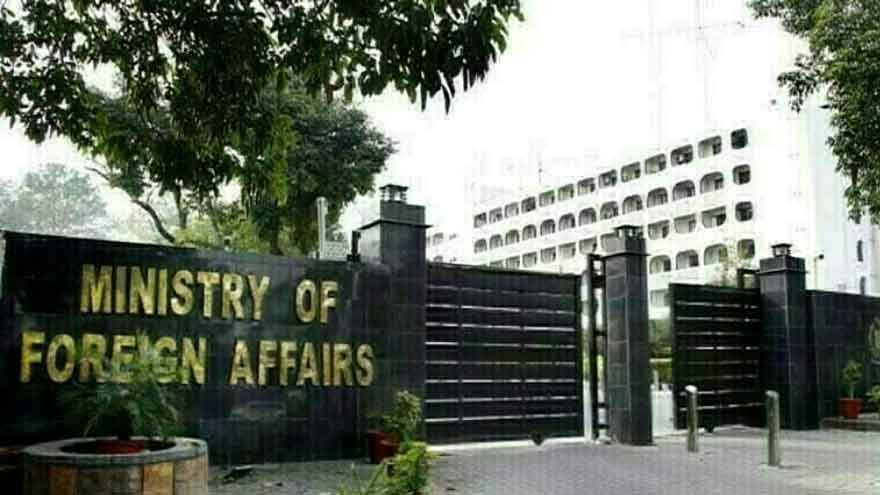
ISLAMABAD, December 27 (TNF): Pakistan on Saturday strongly rejected Israel’s decision to recognize the self-declared Republic of Somaliland, calling the move an attempt to undermine Somalia’s sovereignty and a violation of international law.
In a sharply worded statement, Pakistan’s Foreign Office said Israel’s recognition of Somaliland threatened regional peace and stability and set a dangerous precedent for separatism.
“Pakistan strongly condemns any attempts to undermine the sovereignty, unity, and territorial integrity of the Federal Republic of Somalia,” the Foreign Office said. It added that Islamabad rejected “the announcement made by Israel recognizing the independence of the so-called Somaliland region.”
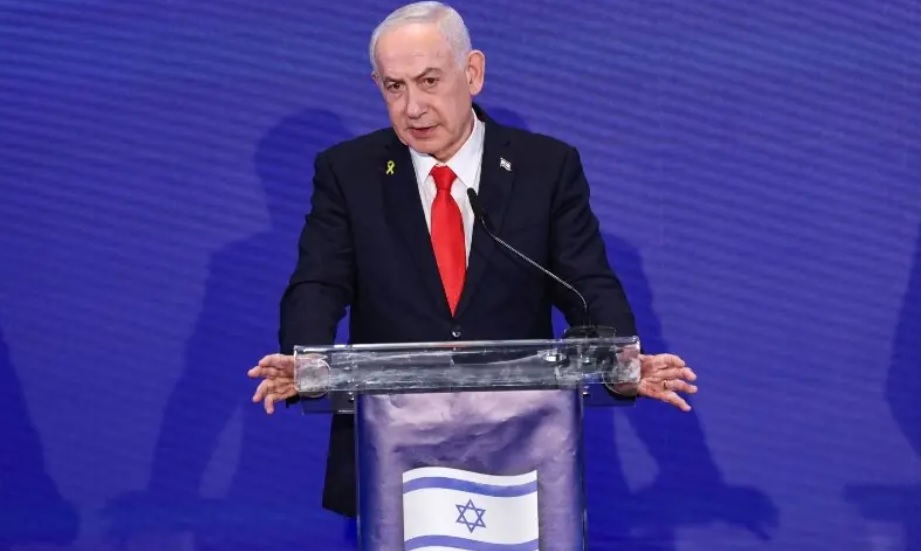
Israel on Friday became the first country to formally recognize Somaliland as an independent state. The announcement followed a joint declaration signed by Israeli leaders and Somaliland’s president Abdirahman Mohamed Abdullahi. Abdullahi later said Somaliland would join the Abraham Accords.
Pakistan said the Israeli move violated international law and endangered peace in the Horn of Africa.
“Such illegal and provocative actions constitute a flagrant violation of international law,” the statement said. It warned that the decision threatened not only Somalia but the stability of the wider region.
Islamabad urged the international community to take a clear stand. It called on global powers to reject Israel’s action and to prevent further steps that could destabilize the region.
Pakistan reiterated full support for Somalia’s sovereignty and unity. It said Islamabad stood by all efforts aimed at achieving lasting peace and stability in Somalia.
The statement came a day after Israel announced its decision, which immediately drew condemnation from several regional and international actors.
Somalia has consistently opposed any recognition of Somaliland. Mogadishu maintains that Somaliland remains an integral part of the Somali state. Somalia’s federal government has vowed to pursue diplomatic and legal measures to challenge Israel’s decision.
Pakistan aligned itself firmly with Somalia’s position. It said recognition of breakaway regions undermines international norms and weakens state sovereignty.
Islamabad also linked the issue to broader regional concerns. The Foreign Office reiterated Pakistan’s “unequivocal rejection” of any plans aimed at the forced displacement of Palestinians.
The statement followed remarks by the Palestinian foreign ministry, which said Israel had previously floated the idea of using Somaliland as a destination for relocating Palestinians, particularly from Gaza. Pakistan rejected any such proposals under all circumstances.
Pakistan reaffirmed its unwavering support for the Palestinian people. It said Islamabad backed the Palestinians’ right to self-determination and the creation of an independent state based on pre-1967 borders, with Jerusalem as its capital.
Israel’s recognition of Somaliland has triggered diplomatic fallout across Africa and the Middle East.
Countries including Egypt, Turkiye, and Djibouti have condemned the move. The African Union also rejected Israel’s decision and reaffirmed its commitment to Somalia’s territorial integrity.
Egypt’s Foreign Minister Badr Abdelatty held phone calls with his counterparts from Somalia, Turkiye, and Djibouti to discuss what they described as dangerous developments in the Horn of Africa. Egypt warned that recognizing secessionist entities posed a serious threat to regional peace.
The African Union said unilateral recognition of Somaliland risked undermining stability across the continent. It stressed that Somalia’s unity remained a core principle of African diplomacy.
Somaliland has operated as a de facto autonomous region since 1991, when Somalia collapsed into civil war. It has maintained its own government, security forces, and institutions. Despite relative stability, Somaliland has failed to gain international recognition for more than three decades.
Analysts say Israel’s move could embolden other separatist movements and complicate diplomatic efforts in Africa. Somalia has long mobilized regional and international partners to prevent recognition of Somaliland.
Pakistan’s response reflects its broader foreign policy position on territorial integrity and state sovereignty. Islamabad has consistently opposed unilateral secession and external interference in internal affairs of sovereign states.
The Foreign Office said Pakistan would continue to engage with international partners to uphold international law and prevent actions that threaten peace.
As reported from Islamabad, Pakistan’s rejection of Israel’s move adds to growing international pressure and highlights deep divisions over Somaliland’s status.
Whether Israel’s recognition will encourage other countries to follow remains uncertain. For now, Pakistan has made its position clear.

 English