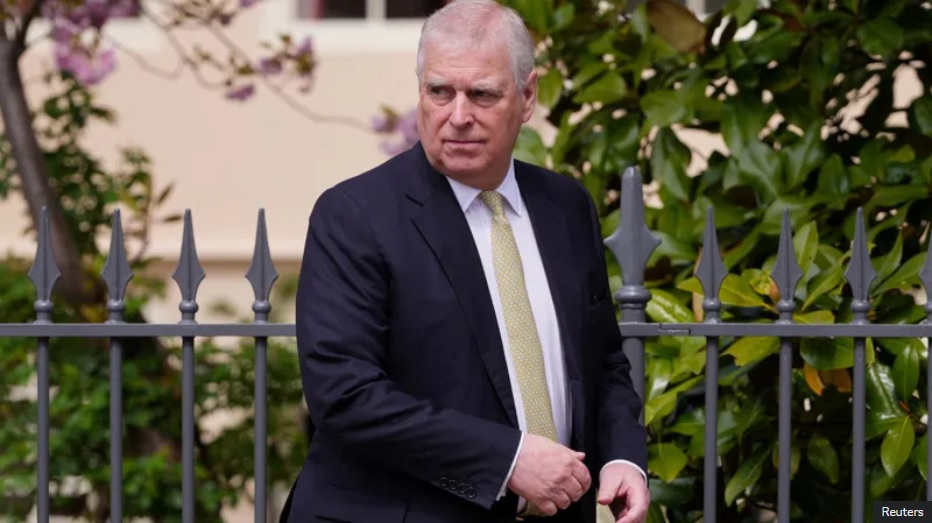
LONDON, December 30 (TNF): The UK Cabinet Office has withdrawn a set of official papers after admitting that an administrative mistake led to the premature release of sensitive records referring to Andrew Mountbatten-Windsor, formerly the Duke of York.
The documents were part of the government’s annual transfer of historical files to the National Archives under the 20-year rule. They briefly became available to journalists under embargo before officials realised the error and removed them from public access.
The papers included a Cabinet Office file from 2004 and 2005 that dealt with royal overseas visits. Among the references were minutes of meetings discussing the travel of several members of the royal family, including Prince Andrew, who at the time was serving as a UK trade envoy.
After the mistake was identified, references to Andrew Mountbatten-Windsor were redacted before the file was formally released to the public on Tuesday at the National Archives in Kew, west London. The Cabinet Office later confirmed that the information had not been intended for disclosure.
A spokesperson said all records were managed in line with the Public Records Act and were subject to a detailed review process before release. The spokesperson added that expert stakeholders were consulted during the process, but the error still occurred.
The episode has sparked criticism from anti-monarchy campaigners, who argue that there is no justification for withholding the papers, especially given Prince Andrew’s loss of royal titles in recent years over his association with the late sex offender Jeffrey Epstein. Andrew has consistently denied any wrongdoing.
Graham Smith, chief executive of the campaign group Republic, said the royal institution remained one of the most secretive in the United Kingdom. He said the documents should be released without hesitation so the public could make informed judgments about the role and conduct of senior royals.
Journalists who reviewed the withdrawn material before it was pulled said the content appeared largely routine. The minutes focused on Andrew’s travel schedule during his tenure as a trade envoy, a role that earned him the nickname “Airmiles Andy.” The trips mentioned included visits to China, Russia, southeast Asia, and Spain, with no immediate indication of controversial decisions.
The withdrawn file was not the only notable release from the latest batch of declassified documents. Other papers transferred to the National Archives shed light on key political decisions taken during the early 2000s.
One set of documents revealed that the Foreign Office firmly rejected any military intervention to remove Zimbabwe’s long-time leader Robert Mugabe, despite growing frustration within Tony Blair’s government. An options paper from 2004 warned that such action would isolate the UK politically, incur heavy costs, and lack a clear exit strategy. Officials concluded that military intervention was not a serious option.
The same papers described Mugabe, then aged 80, as “depressingly healthy” and determined to remain in power until he could secure a succession arrangement of his choosing. The assessment highlighted the limited leverage available to the UK at the time.
Other files showed that Downing Street had been forced to issue an apology in 1994 after a birthday telegram sent by then prime minister John Major to the Queen Mother was addressed improperly. The Queen Mother’s private secretary lodged a formal complaint, although the records do not specify what caused the offence. Officials later blamed a transmission error and even suggested abandoning telegrams altogether.
The documents also exposed the limits of transparency under the Freedom of Information Act. Newly released papers showed that officials refused to disclose details of a private conversation between Tony Blair and French president Jacques Chirac following the death of Diana, Princess of Wales, in 1997. While papers on funeral arrangements were released, a memo summarising the Blair-Chirac discussion was withheld on the grounds that revealing private talks between world leaders was not in the public interest.
The archive release further revealed ambitious but abandoned plans for a major redevelopment of Downing Street under Blair’s leadership. Briefing papers from March 2005 outlined a multi-million-pound project, codenamed Project George, aimed at modernising the ageing estate.
The proposals included a two-storey underground complex beneath the No 10 garden, featuring a 200-seat conference hall that could double as a secure refuge during a terrorist attack. Plans also included an underground service road, new staff facilities, and upgrades to failing sewer, power, and IT systems.
The project was to be funded through a private finance initiative over 30 years and extended beyond No 10 to neighbouring government buildings. The papers do not explain why the plans were ultimately dropped.
The withdrawal of the Andrew-related papers has renewed debate over transparency, accountability, and how historical records involving powerful institutions are handled once they enter the public domain.

 English