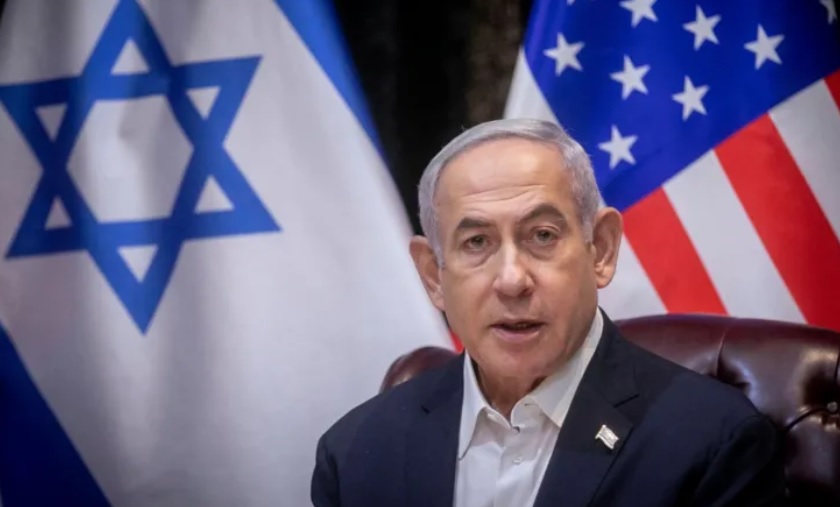
NEW YORK, December 28 (TNF): Israeli Prime Minister Benjamin Netanyahu is set to travel to the United States on Sunday for a high-level meeting with President Donald Trump scheduled for Monday in Florida, an Israeli official confirmed, according to AFP.
The visit will mark Netanyahu’s fifth meeting with Trump in the United States this year, underscoring the intensity of diplomatic engagement between the two leaders amid fast-moving developments in the Middle East.
Netanyahu’s trip comes at a sensitive moment. The Trump administration, along with regional mediators, is pressing to advance talks toward the second phase of the ceasefire agreement between Israel and Hamas in the Gaza Strip. Progress so far has remained slow, and concerns are growing about the durability of the fragile truce.
Speaking to reporters earlier this month, President Trump said Netanyahu had expressed interest in visiting him during the Christmas holiday period.
“He would like to see me. We haven’t set it up formally, but he’d like to see me,” Trump said before departing for his Mar-a-Lago resort in Florida.
Israeli media reports suggest the upcoming meeting will cover a wide range of regional and security issues. According to Israel’s Yedioth Ahronoth newspaper, discussions are expected to include Iran’s nuclear ambitions, the situation in Syria, security arrangements with Lebanon, and the future of the Gaza ceasefire.
The Gaza agreement, brokered in October by Washington and regional allies, was designed as a multi-stage process. While the first phase reduced large-scale fighting, movement toward the second phase has stalled, raising fears of renewed escalation.
Under the proposed second stage, Israel would begin withdrawing from its positions inside Gaza. A temporary Palestinian technocratic authority would take over governance of the territory, replacing Hamas. The plan also includes the deployment of an International Stabilisation Force (ISF) to maintain security and oversee the transition.
One of the most contentious provisions remains the expectation that Hamas would disarm, a demand that the group has resisted. This issue continues to be a major obstacle in negotiations, with mediators warning that it could derail the entire process.
Both Israel and Hamas have accused each other of violating ceasefire terms. These allegations have further strained talks and deepened mistrust. Regional mediators fear that delays could harden positions on both sides.
According to a report by Axios, citing White House officials, the upcoming Trump-Netanyahu meeting is seen as critical to breaking the current deadlock. The Trump administration reportedly wants to announce the formation of a Palestinian technocratic government and finalise plans for the stabilisation force as soon as possible.
The same report noted growing frustration within the US administration. Senior officials believe Netanyahu has taken steps that have undermined the ceasefire and slowed momentum toward a broader political settlement.
Israeli officials, however, argue that security concerns must be fully addressed before moving ahead. They point to ongoing threats from militant groups and the risk of Hamas regrouping during any transition period.
Iran is also expected to feature prominently in Monday’s discussions. Israeli media reports suggest Netanyahu is increasingly concerned about the possibility of Tehran rebuilding its nuclear programme and ballistic missile capabilities, particularly amid shifting regional alliances.
Talks may also touch on the prospect of an Israel-Syria security arrangement, as well as the ceasefire with Hezbollah in Lebanon, both of which carry implications for Israel’s northern borders.
Netanyahu’s repeated visits to the United States highlight the central role Washington continues to play in shaping the region’s diplomatic landscape. With multiple flashpoints active at once, the outcome of his meeting with Trump could influence not only the Gaza ceasefire but broader regional stability.
As the war-weary region watches closely, expectations remain high that Monday’s talks could help determine whether the fragile calm in Gaza holds, or unravels.


 English