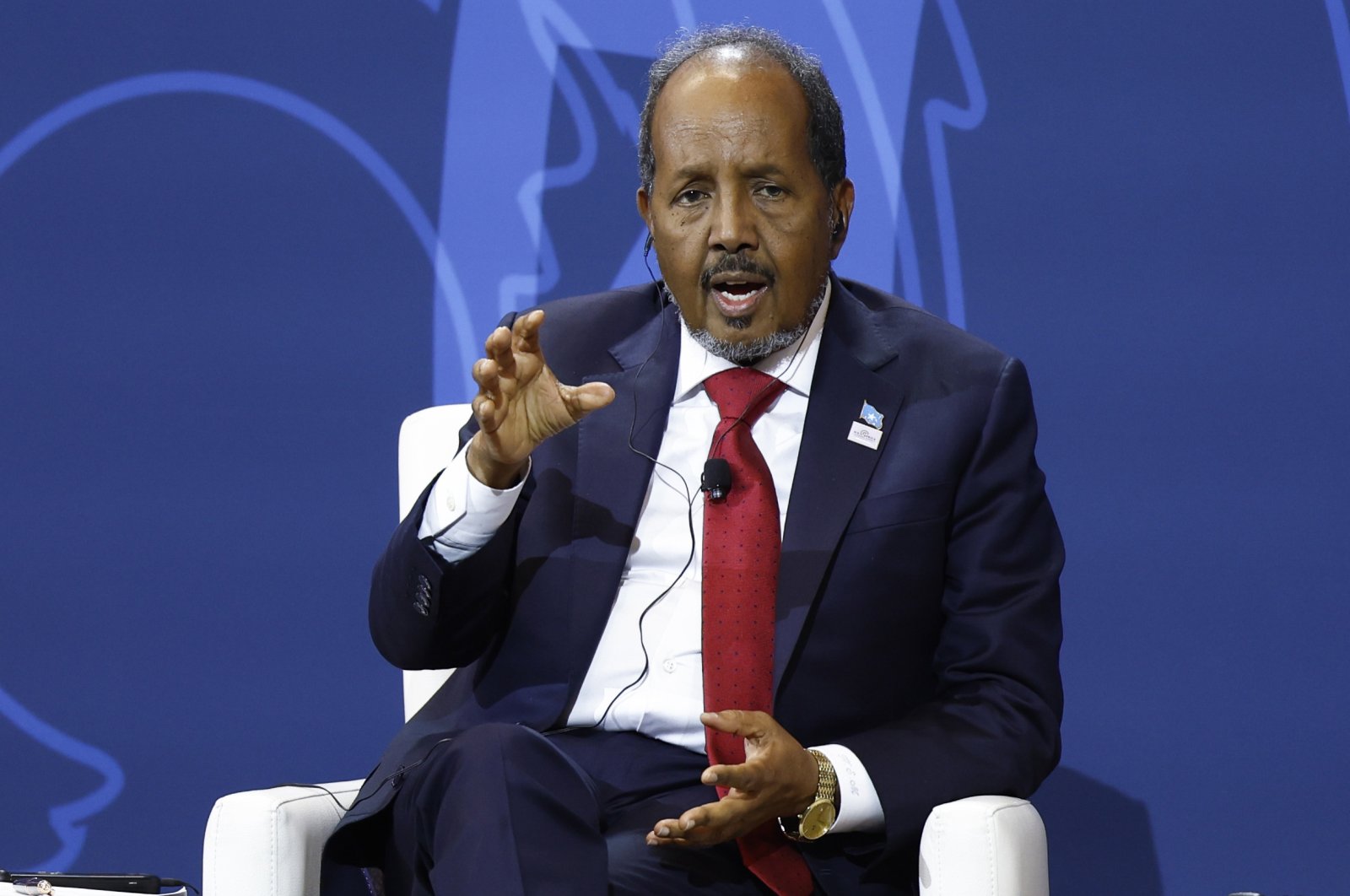
MOGADISHU, December 28 (TNF): Somali President Hassan Sheikh Mohamud has strongly condemned Israel’s decision to recognize Somaliland as an independent state, warning that the move poses a serious threat to regional and global stability.
Speaking at an emergency session of Somalia’s parliament on Sunday, President Mohamud said Israel’s action undermines Somalia’s sovereignty and violates international law. His remarks were reported by TRT World.
“Israel’s recognition of Somaliland is a threat to the security and stability of the world and the region,” Mohamud told lawmakers.
He described the announcement by Israeli Prime Minister Benjamin Netanyahu as a direct attack on Somalia’s unity. Netanyahu made the declaration on Friday, making Israel the first country in the world to formally recognize Somaliland.
“This decision amounts to blunt aggression against the sovereignty, independence, territorial integrity, and unity of the Somali Republic,” Mohamud said.
The Somali president said the move crossed a clear red line. He stressed that Somalia remains a single, indivisible state under international law.
Earlier, Mohamud had also addressed the issue on social media. Writing on X, formerly Twitter, he said Israel’s decision violated established legal norms.
“The illegal aggression of Prime Minister Netanyahu in recognizing a part of Somalia’s northern region is against international law,” he wrote.
He warned that foreign interference in Somalia’s internal affairs would not be tolerated.
“Meddling with Somalia’s internal affairs is contrary to established legal and diplomatic rules,” Mohamud added.
“Somalia and its people are one. They cannot be divided by decisions taken from afar.”
Israel’s recognition of Somaliland has triggered widespread criticism across Africa and the Middle East. Türkiye and several Arab and African countries have already condemned the move.
Regional analysts warn that the decision could destabilize the Horn of Africa, a region already facing conflict, fragile governance and humanitarian crises.
Somaliland declared independence from Somalia in 1991 after the collapse of the central government in Mogadishu. Since then, it has functioned as a self-governing entity with its own administration, security forces and political system.
Despite relative stability compared to much of Somalia, Somaliland has failed to gain international recognition for more than three decades.
The Somali federal government has consistently rejected Somaliland’s claim to independence. It considers the region an integral part of Somalia’s national territory.
Officials in Mogadishu say any direct engagement with Somaliland by foreign governments violates Somalia’s sovereignty and undermines international norms.
President Mohamud repeated this position during his address to parliament. He said Somalia would use all diplomatic and legal means to challenge Israel’s decision.
“This action threatens peace and stability in the region,” he said. “It also sets a dangerous precedent.”
Somalia fears that recognition of breakaway regions could encourage similar movements elsewhere in Africa. Many African states oppose secessionist recognition due to concerns about border disputes and internal fragmentation.
The African Union has long maintained a policy of respecting existing borders to prevent further instability on the continent.
While Israel has not issued a detailed response to Somalia’s objections, Prime Minister Netanyahu has framed the move as part of broader regional outreach. He linked the recognition to Israel’s efforts to expand diplomatic ties under the Abraham Accords.
Somalia, however, rejects this justification. Its leadership argues that regional diplomacy cannot come at the expense of another country’s sovereignty.
The Somali government has also expressed concern over reports suggesting Somaliland could be used for broader geopolitical purposes in the region. Officials fear that such developments could draw Somalia into wider regional rivalries.
Public reaction inside Somalia has been swift. Lawmakers across party lines criticized Israel’s decision during the emergency parliamentary session. Several MPs called for a unified national response.
Security analysts warn that the move could inflame tensions within Somalia itself. It could deepen divisions between Mogadishu and authorities in Hargeisa, Somaliland’s capital.
For now, Somalia is focusing on diplomatic pressure. Officials say they will engage international partners to block any further recognition of Somaliland.
President Mohamud ended his address with a call for unity. He urged Somalis to stand together at what he described as a critical moment for the country.
“Our unity is not negotiable,” he said. “Somalia will remain whole.”
 English