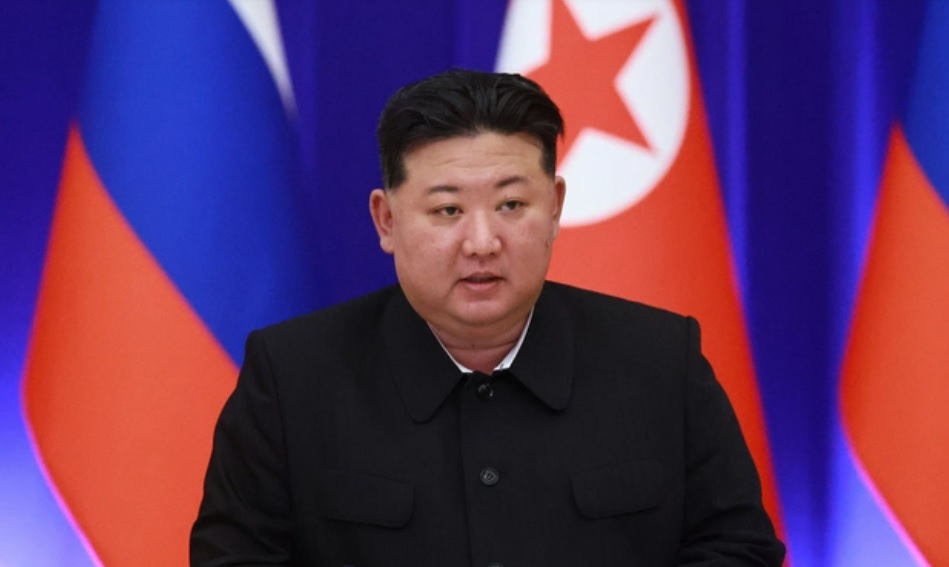
SEOUL, December 27 (TNF): North Korean leader Kim Jong Un has ordered a major expansion and modernisation of the country’s missile production ahead of 2026, signaling Pyongyang’s intent to further strengthen its military capabilities despite growing regional and international concern.
According to our correspondent in Seoul, Kim issued the directive during inspections of key munitions factories, accompanied by senior military and government officials. State-run media reported that the visit focused on boosting production capacity to meet what Kim described as rising operational demands of North Korea’s missile and artillery forces.
The Korean Central News Agency (KCNA) said Kim instructed factories to prepare for “prospective requirements” linked to the deployment and operation of missile units. He stressed that existing facilities must expand output and adopt modernised production methods.
Kim said the country must “further expand the overall production capacity” to keep pace with growing demand from Pyongyang’s armed forces. He also ordered the construction of additional munitions factories, indicating that current infrastructure no longer meets the regime’s military goals.
“The missile and shell production sector is of paramount importance in bolstering the war deterrent,” Kim was quoted as saying. He described missile manufacturing as central to safeguarding the country’s security and strategic posture.
North Korea has sharply increased missile testing in recent years. The launches have included short-range ballistic missiles, intercontinental ballistic missiles, and cruise missiles. Many tests have violated United Nations Security Council resolutions, drawing condemnation from the international community.
Military analysts say the renewed focus on missile production reflects multiple objectives. These include improving accuracy, extending range, and enhancing survivability of North Korea’s weapons systems. Experts also believe Pyongyang aims to present a credible threat to the United States and South Korea, while strengthening its negotiating position.
Some analysts suggest another motive. They believe North Korea may be testing weapons under battlefield conditions before exporting them. Pyongyang has faced allegations of supplying arms to Russia, particularly since the war in Ukraine began. North Korea has denied such claims, but intelligence agencies in several countries say cooperation has increased.
Kim’s factory inspections followed another high-profile military visit earlier this week. KCNA reported that he toured a facility linked to the construction of a nuclear-powered submarine. During that visit, Kim warned he would counter what he described as growing threats from South Korea.
South Korea has recently discussed plans to develop nuclear-powered submarines. Kim said such moves required a strong response from Pyongyang. He framed North Korea’s military buildup as defensive and necessary.
During the submarine factory tour, Kim also reviewed research into what KCNA described as “new underwater secret weapons.” The agency provided few details, but analysts believe the reference points to underwater drones or nuclear-capable delivery systems.
KCNA also reported that Kim oversaw the test launch of high-altitude, long-range anti-air missiles. These systems could improve North Korea’s ability to defend key sites against aerial attacks. Military experts say such tests reflect Pyongyang’s effort to build layered air defences.
The focus on missiles, submarines, and air defence systems shows a clear pattern. North Korea continues to pursue a broad modernisation of its armed forces. The leadership views these capabilities as essential for deterrence and regime survival.
South Korea and its allies have reacted with concern. Seoul has repeatedly warned that North Korea’s weapons development increases the risk of miscalculation. US and South Korean forces continue joint military exercises, which Pyongyang condemns as rehearsals for invasion.
Diplomatic engagement remains stalled. Talks over North Korea’s nuclear and missile programs have made little progress in recent years. Kim has instead doubled down on military self-reliance and technological advancement.
The order to expand missile production suggests Pyongyang expects sustained demand beyond 2025. Building new factories signals a long-term strategy rather than a temporary surge.
As reported by our correspondent in Seoul, the directive underlines Kim’s determination to press ahead with weapons development despite sanctions, economic hardship, and diplomatic isolation.
Regional analysts warn that the move could trigger further arms competition in Northeast Asia. They say continued missile expansion raises risks for regional stability and global security.
For now, North Korea shows no sign of slowing its military ambitions. The message from Pyongyang is clear. Missile production will grow. New facilities will rise. And deterrence will remain at the centre of Kim Jong Un’s strategy heading into 2026.

 English